So, unless you’ve been living under a big, fat rock these past few weeks, Israel and the United States are currently engaged in military conflict with Iran. This conflict in turn, due to its proximity to many oil producing states, has driven the price of oil up pretty spectacularly.
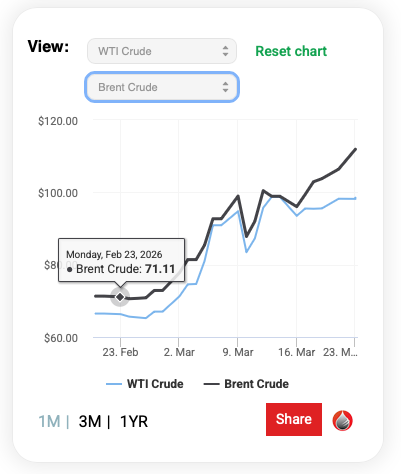
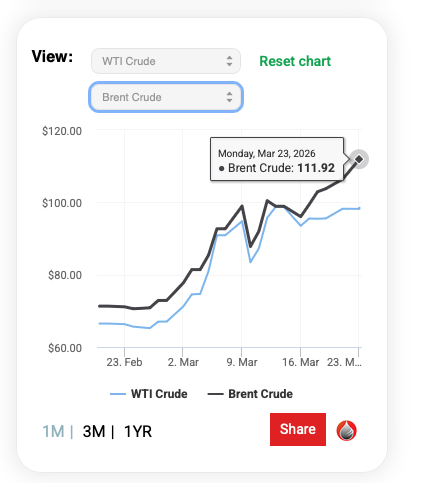
This in turn has led to a rapid increase of the price of fuel at the pumps.
In WA, we have a pretty regular petrol price schedule. Usually, fuel prices drop throughout the week until Tuesday, where fuel is usually at its cheapest, before spiking on Wednesday. About a month ago, the average Tuesday fuel price for 91RON (87AKI for you seppos who read my articles), was roughly $1.60/L. As of last week, that price was $2.20/L.
Even more importantly, Diesel usually sat at a consistent $1.80-$1.90/L, now it’s at $2.60/L.
Australia is impacted by these oil prices especially, since we are a nation that imports 90% of our oil.
This means that the cost of pretty much everything, from transportation to food to groceries, is set to go up, thanks to Big Yahu and The Tangerine Fascist deciding to attack Iran, on the frankly, false assumption that Iran has nuclear weapons.
Just to iterate here, Iran does not have, and does not want nuclear weapons… Not that I wouldn’t be in support of Iran or indeed even Australia having them, quite the contrary actually. I believe that there is no national sovereignty without nuclear armament, and the threat of Nuclear Armageddon for potential invaders is the best way to ensure peace and diplomacy for all nations. No two nuclear armed nations have ever engaged in direct conflict for this very reason.
This oil shock, however, only reinforces my belief that in order for Australia, and indeed all other nations, to be energy secure, we must do all the things we can to reduce our dependency on non-renewable energy. Oil and Gas are, to put it bluntly, expansionist, wasteful energies that require the consistent exploration and discovery of new sources of energy to expand our capacity. New gas wells need to be dug, new oil fields need to be tapped into, new coal mines must grow, in order for Fossil Fuels to be our primary source of energy.
It is a 19th century technology, forcing us into 19th century political ideologies in order to maintain its prevalence in our society. It requires international conquest, colonialism and the killing of people who get in the way of its development to persist as our main energy source. It is the primary cause for most of the modern american military conflicts over the past 5 decades.
Therefore, we cannot, and i repeat, cannot, continue to go down the path of consumption of oil, gas and coal as our primary source of energy, and in fact we must do all that is reasonably practicable to reduce our consumption of fossil fuels entirely, especially those that have to be imported, to shore up national security and to combat climate change.
Energy security, after all, is national security. Without energy, nothing gets done in the modern world.
So, Why Renewables?
Because once a renewable energy source has been extracted, it can be infinitely replaced with the same materials at the end of their service lives. This is why they’re called renewable energies. They can be renewed once they outlive their service lives through material recovery and re-refinement. Solar, Wind, Geothermal, and Hydro are all examples of renewable energy. Nuclear energy has the potential to be renewable, but the processes involved to re-renew nuclear fuel rods are oftentimes consumptive in nature, therefore it cannot be considered renewable.
Take for example, a solar panel. Solar panels are made of Silicon wafers, Aluminium, thermoplastic and glass. All of these materials can be recycled by thermal means at the end of their service lives. It’s fairly easy to generate heat through renewable electricity. Silicon and glass can be melted. Aluminium can be melted, thermoplastics are literally designed to be melted (just ask any 3D printer owner), and so therefore recycling a solar panel is relatively easy. Likewise with a lithium-ion battery too.
A standard monocrystalline solar panel has a service life of roughly 25-40 years, and a standard rooftop 400W solar panel over that period of time is destined to produce 18,200 kWh, or 18.2MWh over the course of its 25 year life, however most solar panels sit in an array of about 12-14 panels, so if you use my house as an example, my 4.9kWh array will produce something in the realm of 255MWh over the minimum 25-year lifespan that they’re expected to produce.
If you put that in terms of full battery charges of my Tesla? If all my solar was being used for was to charge my EV’s batteries, that’s 4,258 battery charges from dead to full. Considering I get about 400km of range to a charge in winter, That’s 1.7 million kilometres of driving. Now, assuming that I only use a third of my generated energy to power my car, that’s still a solid 600,000km of driving range.
Now, I charge, on average, about 25%, or 15kWh of my car’s battery capacity on an especially long commute… Not that I use my car every day, but, Assuming my house uses about say, 5kWh of energy in summer to cool the house overnight (ie when Solar isn’t active) that means that with a pair of Tesla Powerwalls or a comparable Sigenergy or Enphase LFP battery setup, i could theoretically go completely off-grid, sell some power to the grid to offset the cost of Synergy’s supply charge, and practically eliminate my power bill for a solid 25 years.
The importance of all of this though, is I’m not having to constantly refuel my car every time I charge. This is because we’re not really thinking about Electric Vehicles and indeed how batteries work properly, because…
Batteries are not fuel tanks.
Get the idea of “Fuel Tank” out of your head here. A Battery is more like an electrochemical spring more than it is a fuel tank. Whilst I have said in the past that the kWH is the new litre and it’s often good to think about EV battery packs in the same way as a fuel tank, how they actually work is nothing like how a fuel-powered vehicle works. In fact, all the energy to power your car is already stored in the battery, even if it’s depleted… It’s just in the wrong spot.
When you charge or discharge a battery, you’re not adding electrons or removing electrons from the pack, you’re simply shifting the electrons from one side of the pack to the other by means of a source pushing them from one side to the other. The diagrams below from the US Department of Energy will explain this pretty succinctly.
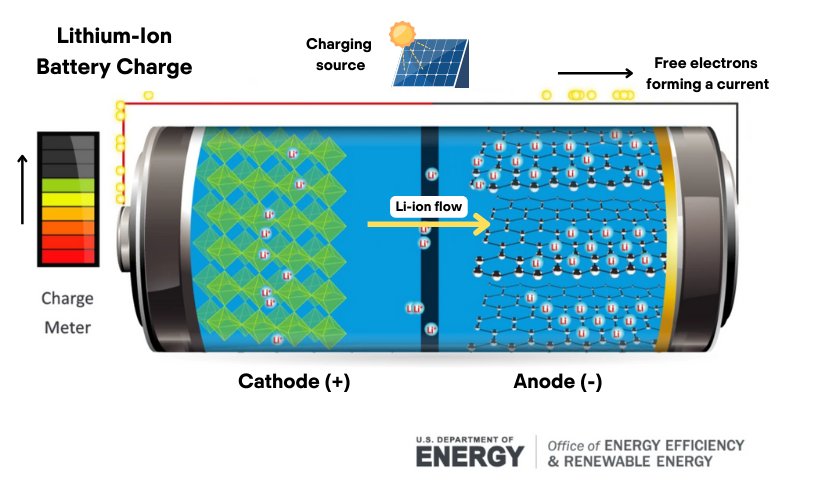
When a battery is charged, Electrons are pulled from the Positively charged side, to the negatively charged side of the pack by means of something which provides a form of external electromotive force. This creates a difference in the state of charge in the pack. This potential difference is measured as the pack’s voltage.
A battery’s voltage is the difference in the state of charge between one side of the battery and the other. If a Lithium Ion Cell is reading say, +4.2V, it means that the difference in the state of charge between the Positive and Negative sides of the battery is 4.2 Volts Positive.

When you charge a battery, you are effectively “winding up a spring”, and putting energy in the high end of the battery. The above picture of a Toy Cybertruck does a better job of explaining how EVs work than most things, really. When you wind the spring of That to Cybertruck, you’re “Charging” the battery, and then when you let the truck go, that energy is then “discharged” to move the truck by means of the spring unwinding and sending energy to the car’s gearbox.

Now, this difference of potential, and the laws of thermodynamics, the Second Law especially, means that things that are in a high energetic state want to move towards things that are in a low energetic state in order to achieve equilibrium, this process is known as entropy. This is how batteries work, and how clocksprings work.
This is, for example, how heat pump air conditioners work. They pull the heat out of the air by making the evaporator head (the thing in your house) colder than the air inside, and make the condenser head (the thing that’s outside your house), hotter than the air outside. All it’s doing is moving the heat energy in your house from a high state to a low state at both ends.
Likewise this is also how batteries work. Electricity wants to move from a high state of charge to a low state of charge. This is why lightning strikes happen. High states of charge in the clouds want to equalise with the low state of charge in the ground. The difference in electrical potential gets so high, often to the tune of millions of volts, that lightning strikes occur.
So, with a battery, all we are doing is slowly releasing electrical potential energy from one side of the pack, through a load, to the other side of the pack. The energy flowing through the load is how we get electricity to do stuff, and it’s also, fundamentally adherent to the First law of Thermodynamics, which states that energy cannot be created or destroyed, only converted.
So what about Fossil Fuels then?
When we burn fossil fuels, we convert the chemical energy stored in the fuel to heat energy and then subsequently to kinetic energy which turns gears, cogs, generators, whatever. The thing is, most of the energy that is generated from these processes leaves the system and enters the environment as a form of wasted heat. This is why ICEVs are so inefficient, and why power plants, especially closed-cycle plants that capture and condense steam exhaust heat for additional energy generation, are more efficient than your car’s engine at converting energy into mechanical motion.
Heat is essentially energy that is used to make atoms wiggle. It’s expelled through your car’s exhaust, into your engine block, so on and so forth. It’s why your engine needs coolant, and why the exhaust gases and pipes coming out of your car’s engine get so hot. All that is wasted energy that’s being released. It’s gotta go somewhere, after all. Too much heat will cause the oil which lubricates all your car’s rotating assemblies to denature and break down, resulting in a seized engine.
Now EVs also need coolant. They also need lubricants too, but the thing is, both of these are recyclable. Coolants can be filtered, used oil can be repolymerised. Also, the primary reason behind needing to change your car’s oil, ironically enough, is due to the heat of your engine literally cooking the oil, causing it to denature and break down over time, resulting in a loss of its lubricant properties.
This is why despite EVs having oil in their drive units, they don’t need to be changed all that often, EV drive units really don’t get hot enough to bake the oil. As the linked forum post states, even the performance-oriented drive units in high end Performance EVs like the Model S barely get close to the denaturing temperature of the lubricants used to lubricate them.
We can apply these same principles to fossil-fuel powered power stations. Whilst yes, they are more efficient than ICEV engines in cars, they are still ICE engines. Even the most efficient gas-turbine power plant is still an internal combustion engine, it still has an intake, compression, expansion and exhaust stage, and it still runs on what is essentially the Otto thermodynamic cycle, just without a reciprocating piston assembly.
Those fuels, once burnt, turn mostly into heat, which is dissipated into the surrounding environment, as well as noxious CO2 and NOx gases which warm our planet. It also means that we have to go hunting for new sources of energy as they’re depleted.
You know the meme ICEheads post about us EV guys apparently needing to change batteries every two years or so to keep our cars going? Yeah, Fossil fuels are a lot like running your car on Duracell AAs… Only way, way worse, because at least Alkaline batteries are recyclable and therefore somewhat renewable.
Once that fuel is burnt, it’s burnt. You don’t get that fuel back. Well, you might, in like, a couple of hundred million years, maybe. But we’d all be long dead by that point.
Besides, all that energy in oil products, ironically enough, was made by the gods-forsaken sun! Pretty much all lifeforms, either directly or indirectly, get their energy from the sun. Plants grow through photosynthesis, they then die, decompose, turn into gas and oil over millions of years, and then subsequently, we burn those fuels in our cars, ships, aeroplanes, whatever. In a sense, it’s solar with extra steps, so why are we bothering with those extra steps when we can go straight to the source?
Well, that’s because capitalism kinda depends on it.
Oil in fact, and its exploration, are key underpinnings of the system of capitalism. Capitalism is a system that depends on infinite growth to benefit shareholders. WWI was a battle of Coal over Oil domination, and future wars will be a battle over who gets to control the transition from oil to renewables. Renewables, are, unfortunately for billionaires, going to happen. The economies of scale directly benefit from it, and oil companies know this. Billionaires also know this. Why do you think Tesla’s so hellbent on it?
Hilariously enough though, what ends up happening when we make the push to renewables, is we accidentally may enter the beginnings of a Communist utopia, and not the Red-flag waving Soviet kind either, we’re talking the Star Trek kind.
This is why other people, especially those involved in the production of media and fossil fuels alike, are just so terrified of it. If we don’t have to fight wars over non-renewable resources such as coal, oil and gas, and if Lithium, Sodium and other ionic compounds, combined with doped photovoltaics are all we need to provide energy to our entire power grid, what is even the point of Capitalism? We can just recycle these materials at the end of their lives. We can keep building them so long as the materials exist. We don’t need to go looking for new sources once we have all the sources we need.
Do you wanna know what Communism actually is? It’s the idea of a stateless, classless, limitless society, where work is a choice, not a necessity, and where energy, food and essential resources are available in abundance. It’s hilariously, what those in the abundance movement are seeking to achieve, accidentally, even if they’re a movement full of sweaty, basement-dwelling ancaps.
Does this mean private property will still exist? Well if by means of home ownership and the ownership of the means of energy production? Sure. But you won’t see people hoarding houses, hoarding solar panels, and so on, people would own the panels they need to power their vehicles and their lives. We’d produce more panels as more humans are needed.
The biggest problem with all of this though, is who is paying for it? This is the biggest issue with the Abundance movement at large, and its proponents like Elon Musk and Jeff Bezos. Whilst they talk a lot of game, the Abundance movement in its current billionaire-led form is communism for the wealthy. Renewables will need to get cheaper and cheaper, and more accessible to the global south to make this push into a post-energy-scarcity society possible, and it must be doable without feudalist shackles over these things, things like software and the like.
Therefore the push to renewables also needs to come with a push for a more egalitarian, socialist society. The idea that we build our cities, our power grids and our food supplies upon the needs of our people, not in accordance with the agendas of billionaires. This is why movements like the Teal Independents in Australia do not serve the interests of the people, and instead we should be looking towards parties like Labor or The Greens to usher in the renewable future in Australia, the former especially due to their success with the Future Made in Australia plan.
But this is leaning back into Partisanism. The push to renewables should be universal across all parties. If you are a conservative and you do not like unions or socialism or anything of the sort, solar and batteries allow you to be less reliant on the government or centralised resources in general for your energy generation. Solar and Renewables are, in a sense, the most individualist form of energy in existence, especially in Australia.
Politics is not the question of which party you should vote for, it’s a question of how things should be done. The goal is to build a society built on renewables, because if we continue to run our lives based on oil, we will continue to see price shocks, bloodier and bloodier wars, and eventually, a society built on the backs of the most powerful individuals known to man. This can also befall a renewables future, sure, but it means that less people will die in wars for oil. There won’t be a need to bomb Iran, or take Venezuela, or Greenland or whatever.
In the end, reducing our dependence on finite, burnable fuels is what will eventually drive us into oblivion, and the Climate does not care who you voted for, We’re all equally fucked on a burning planet.
So, maybe, if you’re considering building a new home, or buying a new car, think about the current oil crisis for a second. It will, eventually end. Or it might not, who knows? In this case, why the hell are you bothering with choosing a new ICEV when EVs are getting cheaper, solar is getting cheaper, and batteries are getting cheaper? The time to push for renewables is now. Do what you reasonably can to reduce your fuel use, beit through buying an EV, Hybrid or more efficient car, putting solar and batteries on your home, or using public transit more. Every little bit helps.
Beano out.